From Germany, the conflict in the Middle East can seem distant or irrelevant. Frankfurt may be well beyond the reach of even the most advanced missiles of the Islamic Republic of Iran, but the escalating war between it and the United States and Israel still holds many implications for Europe. Rapidly rising oil prices, caused by Iran’s closure of the Strait of Hormuz, will contribute to general inflation across the Eurozone, as well as in most of Asia. The travel plans of some in the Frankfurt International School (FIS) community might also be affected: popular tourist destinations in the Persian Gulf have suffered drone attacks from Iran. Most significantly, Europe’s most powerful nations are moving military forces to the Middle East.
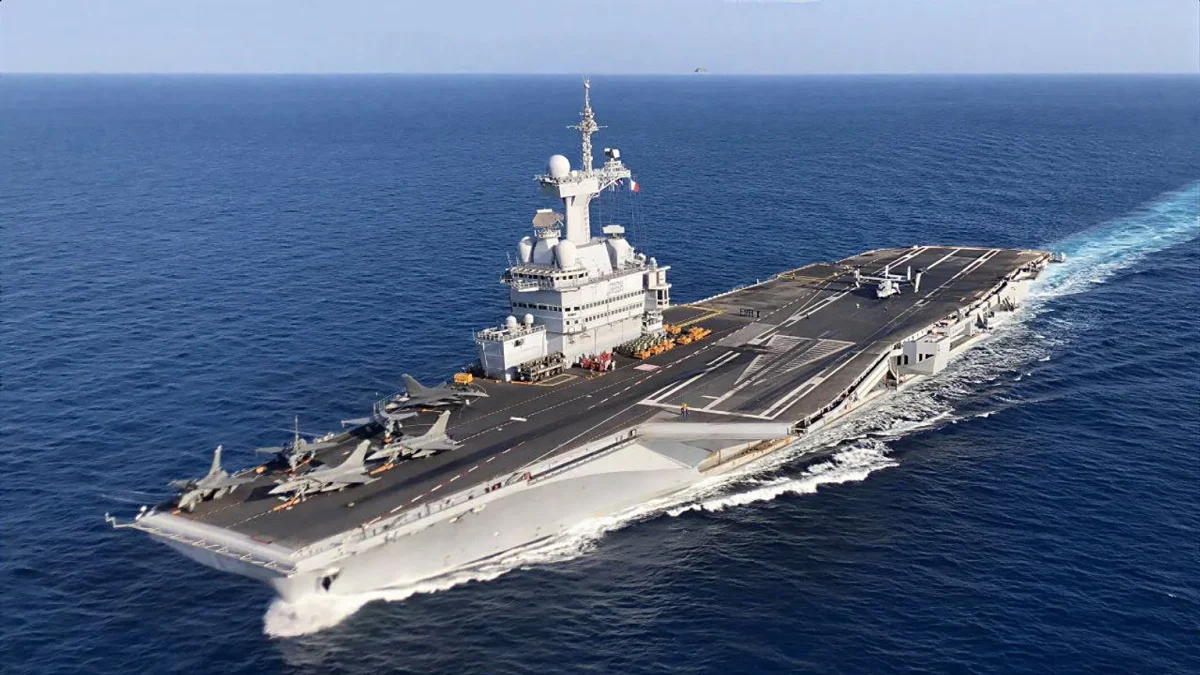
When the United States and Israel launched airstrikes over Iran on the morning of February 28th, most European leaders expressed caution over the operation and condemned Iranian strikes on Arab nations that host U.S. military bases. Spain is a notable exception, with Prime Minister Pedro Sanchez condemning the strikes and characterizing them as inconsistent with international law. German Chancellor Friedrich Merz stated that “the Iranian people have a right to determine their own future”—deposing the authoritarian regime in Iran is a possible goal of the American/Israeli intervention, along with eliminating the Iranian nuclear weapons program—but did not endorse the strikes. Later, the leaders of the United Kingdom, France and Germany released a joint statement stressing the need to “destroy Iran’s capability to fire missiles and drones” and agreed to “work together with the US and allies” to achieve this. However, none of these nations have as of yet participated in strikes against Iran. They have sent forces (including the sole French aircraft carrier) to the Eastern Mediterranean in order to defend the island Cyprus, a member of the European Union, from drone and missile attacks. A British base on Cyprus was hit by a drone strike, likely from Iran’s Lebanese proxy Hezbollah, early in the war. Despite diplomatic opposition to the strikes and the U.S./Israeli operation in general, Spain also deployed its most advanced frigate to Cyprus.
While the nations of Europe may be willing to send warships to defend an E.U. member state, they have so far been reluctant to engage further. When U.S. President Donald Trump requested on Monday that European countries send naval vessels to escort oil tankers through the Strait of Hormuz, Europe declined to do so. The Strait of Hormuz, between Iran and Oman, is a key passageway for the global flow of oil, and Iran has threatened to close it through drone attacks and mines. The rationale for doing so would be to keep oil supplies flowing, and to reverse the rapid rise in oil prices—the price of Brent crude, the international benchmark, recently surpassed 100 dollars a barrel, almost 50% more than the pre-conflict price. Even if Europe’s leaders decide that they will not send forces to reopen the channel, rising energy prices will likely affect the European economy. Russia’s invasion of Ukraine in 2022 upended the European energy environment: prior to the invasion, much of Europe relied on Russian gas for electricity generation and heating. After the invasion, many countries switched to buying gas from Middle East, particularly Qatar. Qatar’s primary gas refinery was hit early in the war, and the closure of the Straits of Hormuz puts additional pressure on energy prices. Some say Asia will be most directly impacted by the closure, but any increase in energy costs could imperil Europe’s fragile economic growth.
While Iran has not publicly expressed hostility to Europe in particular, Europeans have been caught up in Iranian strikes on Arab nations in the Persian Gulf. Despite the strikes ostensibly targeting American bases, many drones and ballistic missiles have ended up striking civilian areas, such as Dubai International Airport. Videos of drone interceptions above tourist-filled beaches abound on social media. Dubai is a popular vacation spot for Germans, and the conflict is leading to significant travel disruptions. “My family’s trip to Dubai for spring break had to be cancelled because there aren’t enough flights, and it’s not perceived as safe” lamented 10th grader Andrew Lamb. Aware of the danger, many European nations are organizing flights to repatriate their citizens trapped in the region.
Now in its third week, the conflict shows no sign of ending in the immediate future. Iran and the United States insist that negotiations over its nuclear capability or a possible ceasefire have not resumed, and strikes continue in both Israel, Iran and the Gulf countries. Despite being a non-combatant, Europe is still affected by oil shocks, and will be watching the conflict closely. The continent may have so far avoided direct participation, but the next few weeks will show whether that stance of cautious non-intervention can hold.